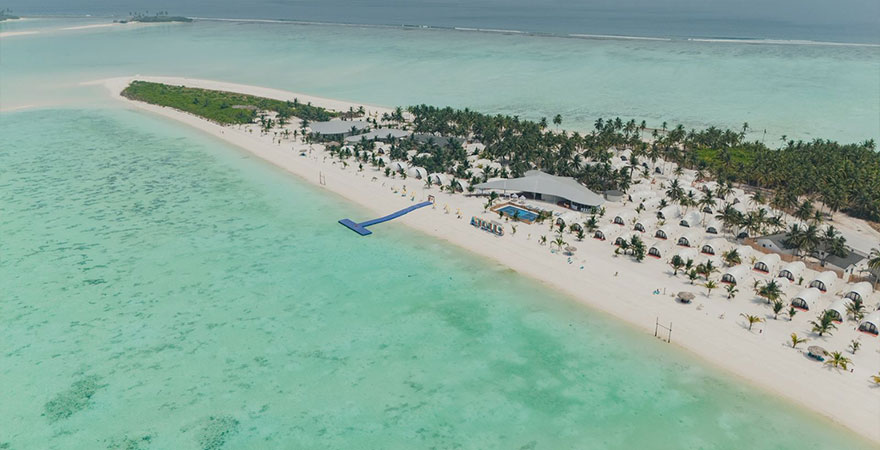
Lakshadweep is famous among tourists for its stunning natural landscaping and unique coastal features. If you are wondering why is Lakshadweep known as a coral island, here is the answer, coral formations are one of the most interesting parts of this group of islands. In addition to their unusually blue waters, Lakshadweep's atmosphere of calmness and tranquillity attracts eco-driven vacationers seeking to escape the stresses of everyday life.
The Magic Behind Lakshadweep's Coral Identity
To know more about why is Lakshadweep known as a coral island, you must know that unlike many other islands formed from volcanic activity or sediment, Lakshadweep Islands are all made up of coral polyps that create their skeletons from calcium carbonate, creating massive coral reef systems.
The following points help to explain how coral is formed:
- Warm, shallow ocean water is necessary for coral polyps to thrive, and they reproduce by layering themselves on top of one another for thousands of years.
- Through this continual process, corals form large, circular ring structures called atolls around enclosed lagoons as they build up their structures.
- Of the total 36 Lakshadweep Islands, only ten are inhabited, and all 36 are supported by coral bases.
Because of the corals, there are white sand beaches and colourful fish at each of the Lakshadweep islands, which provide an ecosystem that could not survive without the corals' assistance.
Exploring the Lakshadweep Coral Island
Due to the corals that are present on all of the Lakshadweep Islands, there is a natural, colorful-coral and white-sandy beach supporting this ecosystem would not exist without the corals.
Exploring the Lakshadweep Coral Island
The Lakshadweep coral island is an amazing work of natural art. Each beach and lagoon contains various fragiles ecosystems to see and explore. You will find a wide variety of different types of fish and sea fans when you snorkel at Lakshadweep.
Formation of Coral Islands Explained
The geological history of Lakshadweep can be explained in terms of the formation of coral islands. All coral islands were formed as the result of volcanic activity, which created an underwater volcanic platform in the Arabian Sea. Coral larvae are then settled onto this platform, and when they grow up to the surface as polyps (the newly formed coral), the original polyps die. As new polyps develop, they continue to build upon the previous ones until the entire platform is above the water.
This entire process is made up of three parts:
- Coral requires sunlight in order to grow, so the coral reef must be located at or near the water's surface.
- As the waves and tides break down the coral, they add sand to the existing sand nearby, helping to form new beaches.
- Finally, a variety of plants, such as coconut palms, have become established over a long period of time, which helps to keep the land stable.
It typically takes 5000 to 10000 years for a coral island to form into an island that is a true paradise and at least one metre above the tide lines.
Coral Reef Islands in India: Lakshadweep's Unique Place
Among coral reef islands in India, Lakshadweep has many unique aspects as it is the only union territory having all its islands in the form of atolls. In addition, the islands lie between 200 and 440 km off the coast of Kerala; therefore, they cover a total land area of 32 square kilometres but a total ocean area of 78,000 square kilometres. The fact that they are so remote means that the islands are pristine and were protected from human influence and development.
How Coral Islands Are Formed in Lakshadweep
Understanding how coral islands are formed over time through natural processes. Coral polyps create limestone skeletons which then grow into large reefs. The increase in water level due to global warming or the decrease of land height (sink) allows lagoons to form in the circular structure that surrounds the coral reefs.
Development of a coral reef and coral islands is a progressive process and the following sequence occurs in the development of a coral reef:
- The fringing reef surrounds a newly created volcanic structure as the volcano is developing.
- The barrier reef begins to form as the volcanic structure begins to sink and grow outward from the base of the volcano.
- Finally, when the volcano has completely submerged, an atoll is created.
Lakshadweep illustrates the theory of Darwin regarding the evolution of coral reefs and their constituent islands.
The Coral Islands of Lakshadweep Diversity
The coral islands of Lakshadweep vary a great deal from very small uninhabited islands to larger inhabited islands such as Kavaratti and each has their own unique lagoons for kayaking and riding in glass bottom boats. Conservation efforts are currently being employed to protect these fragile environments from the harmful effects of climate change.
Spotlight on Lakshadweep Coral Reefs
Lakshadweep coral reefs, which comprise more than 600 kinds of fish, include some unique species. These living barriers of coral reefs protect the islands from ocean waves while also supporting marine diversity. Sustainable tourism will preserve coral reefs for future generations to come.
Lakshadweep Coral Atolls: Nature's Masterpieces
Examples of Lakshadweep coral atolls can be found in the waters around Agatti island and Bangaram island. These coral atolls create beautiful landscapes suitable for postcards, and the ring-shaped coral reefs from the atolls provide calm, clear water for swimming in the lagoon. The balance of the lagoon ecosystems is essential to the health of the coral reef with regard to water pollution.
Luxurious Stay at Praveg Atoll's Lakshadweep Resort
For a truly unforgettable vacation, stay at the resort in Lakshadweep located on the beautiful Thinnakkara island and managed by a unique Hospitality Company called Praveg Atoll’ Lakshadweep. Praveg is committed to offering guests responsible eco-friendly living while providing the best in luxury accommodations.
The Benefits of the Praveg Atoll Lakshadweep Resort
- Waterside Villa with private decks overlooking the Coral Lagoon.
- The Infinity Pool connects with the horizon, creating an appearance of continual transition from pool to ocean.
- Yoga Pavilion and organic coconut oil used for spa treatments.
- Guided tour of snorkeling options in the vicinity of the atoll with expert guides on marine life.
Thinnakkara Island is secluded and quiet with very few people to see; it's a great place for a couple or a single traveler who prefers to relax.
Vegetarian dining delights:
- Pure coconut curry with local spices.
- Appam is made from rice and served with vegetables.
- Fresh fruit platters of papaya, mango, pineapple and banana.
- Grilled paneer skewers served with mint chutney for dipping purposes.
Sunset boat rides and stargazing complete this unique setting.
Activities on Thinnakkara Island
Thinnakkara Island is an exciting addition to your Lakshadweep trip! Praveg Atoll’s Lakshadweep resort offers all the comfort you need without ruining the environment.
Top experiences:
- Paddle boarding in shallow waters over coral reefs.
- Watching birds migrate and others in their natural home (there are many migratory birds in the mangroves).
- Culture and music evenings with storytelling.
- Ayurvedic retreats featuring vegetarian food.
The use of permits and seaplanes has been simplified so that people can get from Agatti easily.
Conclusion
The coral paradise that is Lakshadweep is because of all of the living coral reefs and atolls - the underwater beauty here is unmatched! Whether you want to snorkel through the colourful coral reefs under excellent conditions or relax at the Praveg Atoll’ Lakshadweep resort on Thinnakkara Island, you will definitely find a way to recharge on your trip to Lakshadweep. Just book some time on your calendar to get a first-hand experience of why is Lakshadweep known as a coral island, while enjoying luxury right in the middle of tropical India!